Some
historians believe that the bow Robin Hood
used was made from English yew; hence 'taxus',
the Latin word for "bow"
UNIQUE
FEATURES:
T
axol, which is used in some cancer treatment,
is derived from the bark of the western
yew
The
Western Yew provides food for elk, deer,
moose, caribou
Square
shape in young trees becoming more coneshaped
with age
The
Western Yew branches spread horizontally,
or sweeping downwards, trunk is twisted
LOCATION:
The
Western Yew is found in wetter forests in
the coast and interior of BC
The
Western Yew grows at low to mid elevations
The
Western Yew prefers areas of abundant soil
nutrients
SIZE:
Western
Yew grows 5 to 15 metres in height
appears
like a low spreading shrub or small tree
CONES/FRUIT:
pollen
cones are produced on the male trees
seed
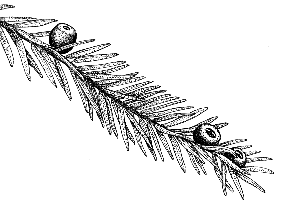
cones, produced on the female tree, appear
as a coral-red/salmon coloured, fleshy "berry"
which contains a single seed
NEEDLES:
shiny,
flat, sharp, pointed tip
the
top side is a darker green than any other
conifer, the underside is a pale yellowish-green
ridge
down the centre
arranged
spirally on twigs
BARK:
thin,
scaly
dark
reddish or purplish
rose
coloured underbark is exposed when scales
peel off
WOOD
CHARACTERISTICS:
dense,
strong, resilient
USES:
modern
- taxol
traditional
- bows, tools, paddles, snowshoe frames;
the fruit, although considered toxic, was
sometimes eaten in small amounts; inner
bark: braiding, weaving